

'Climate & Energy' is an interdisciplinary focus area that aims to meet the energy needs of winter sports in a way that does not harm the environment or climate. This requires a transition to clean, renewable energy sources, a reduction in greenhouse gas emissions, and an increase in energy efficiency. Governments, businesses, and individuals around the world are working to find solutions to address the challenges of climate change and create a sustainable energy future.

Strategic Goals
Implementation of energy-efficient technologies and increased use of renewable energy to minimize CO₂ emissions from ski resorts, training and competition centers, events, and the House of Ski.
Promoting electric mobility and the complementary use of synthetic fuel in the winter sports sector to reduce emissions.
Promoting environmentally friendly mobility options to reduce CO₂ emissions associated with travel to the destination and whilst there.
Implementing climate protection measures and developing adaptation strategies to ensure that sporting activities can continue in the future, despite changing environmental and snow conditions.
Consistent reduction of
emissions, supported by climate and energy balance assessments, and consideration of possible offsetting.
Developing and implementing innovative technologies and practices at the organisation’s impact levels. Annual recording of relevant CO₂ emissions by sector at the House of Ski, with expansion into other areas
Strengthening collaboration between the winter sports sector, environmental organisations, governments and other stakeholders to develop joint solutions for climate protection in winter sports.
Principles
- Paris Climate Agreement: Climate protection is a global challenge, and the goal is to limit global warming to 1.5 degrees Celsius if possible
- Drastic Reduction in Greenhouse Gas Emissions: A drastic reduction in CO₂ and other greenhouse gas emissions is necessary to curb global warming, including in the context of winter sports.
- Climate Protection Act: With the amendment to the Climate Protection Act, the federal government has enshrined the goal of greenhouse gas neutrality by 2045, with a 65 percent reduction in emissions by 2030 (compared to 1990 levels). The European Green Deal and the EU climate target support these measures.
Projects: Climate & Energy
Description
The goal of the initiative is to raise awareness of the CO₂ emissions generated by the athletes’ travel activities and to make an active contribution to climate protection and nature conservation. All teams and staff members—whether athletes, coaches, medical staff, officials, or administrative staff—receive a calculation of their mobility-related emissions and the corresponding CO₂ equivalent every six months. This results in a personal “climate budget,” which is invested on a voluntary basis in selected projects promoting sustainability, climate protection, and environmental conservation. The project is funded through a partnership model: the athletes themselves cover one-third of the costs, while the association and the Ski Safety Foundation each contribute one-third. This is in keeping with the principle of “Avoid, Reduce, Take Climate Responsibility.”
- Time period
- ongoing
- Project Sponsor
- SNBGER, SIS
- Focus
- Sustainability, Transfer
- Area of Action
- Climate & Energy
- Area of Responsibility
- Winter Sports Associations | House of Ski
- Topic
- Climate Change

Description
Together with the DSV, our partner M4Energy has launched the "skiEnergy" project to support youth development in clubs.
Here’s how it works:
All ski clubs can register for free. When residential or business customers sign up for an electricity and/or gas contract through the skiEnergy project, they can select one of the registered clubs. This chosen club receives financial support once a year based on the customers’ consumption: for every kWh of electricity consumed, 1 cent (0.5 cents for gas) goes to the selected club. This innovative model is designed to enable ski clubs to fund youth development and sustainable projects.
Project Partners
M4Energy
- Time period
- ongoing
- Project Sponsor
- DSV
- Focus
- Transfer, Sustainability
- Area of Action
- Climate & Energy
- Area of Responsibility
- Winter Sports Associations | House of Ski

Description
The Climate.Sports.Snow Expert Forum examines the future of snow sports from a climate science perspective. Through interdisciplinary dialogue, the forum aims to analyze challenges, identify opportunities, and develop strategies for the sustainable development of snow sports. In total, more than 20 authors from 14 scientific institutions are contributing to the forum, helping to present the current state of research from their respective disciplines and perspectives. The key findings and recommendations for action are continuously documented in position papers.
- Time period
- ongoing
- Project Sponsor
- SIS
- Focus
- Sustainability, Future & Environment, Transfer
- Area of Action
- Climate & Energy
- Area of Responsibility
- Winter Sports Associations | House of Ski
- Topic
- Climate Change, Dialog, Expert Network
- SDG
- SDG 13: Climate Action Measures
Description
The Alpine Climate Summit brings together experts from the scientific community, climate activists, and representatives from the business sector and leading media outlets in the Alpine region on the Zugspitze. The changes, challenges, and opportunities posed by climate change in the Alpine region will be discussed on site. The Foundation for Safety in Ski Sports provides scientific support to the Alpine Climate Summit.
- Time period
- ongoing
- Project Sponsor
- SIS
- Focus
- Sustainability, Transfer
- Area of Action
- Climate & Energy
- Area of Responsibility
- Winter Sports Associations | House of Ski
- Topic
- Dialog
- SDG
- SDG 17: Partnerships for the Goals
Description
The SIS ECO Award is presented annually by the Foundation for Safety in Ski Sports to companies that demonstrate outstanding achievements in technical environmental protection and sustainable development. The award recognizes high quality and long-term commitment to environmental stewardship.
- Time period
- ongoing
- Project Sponsor
- SIS
- Focus
- Sustainability, Transfer
- Area of Action
- Climate & Energy
- Area of Responsibility
- Winter Sports Associations | House of Ski
- Topic
- SIS Seal of Quality, Dialog
- SDG
- SDG 13: Climate Action Measures

Description
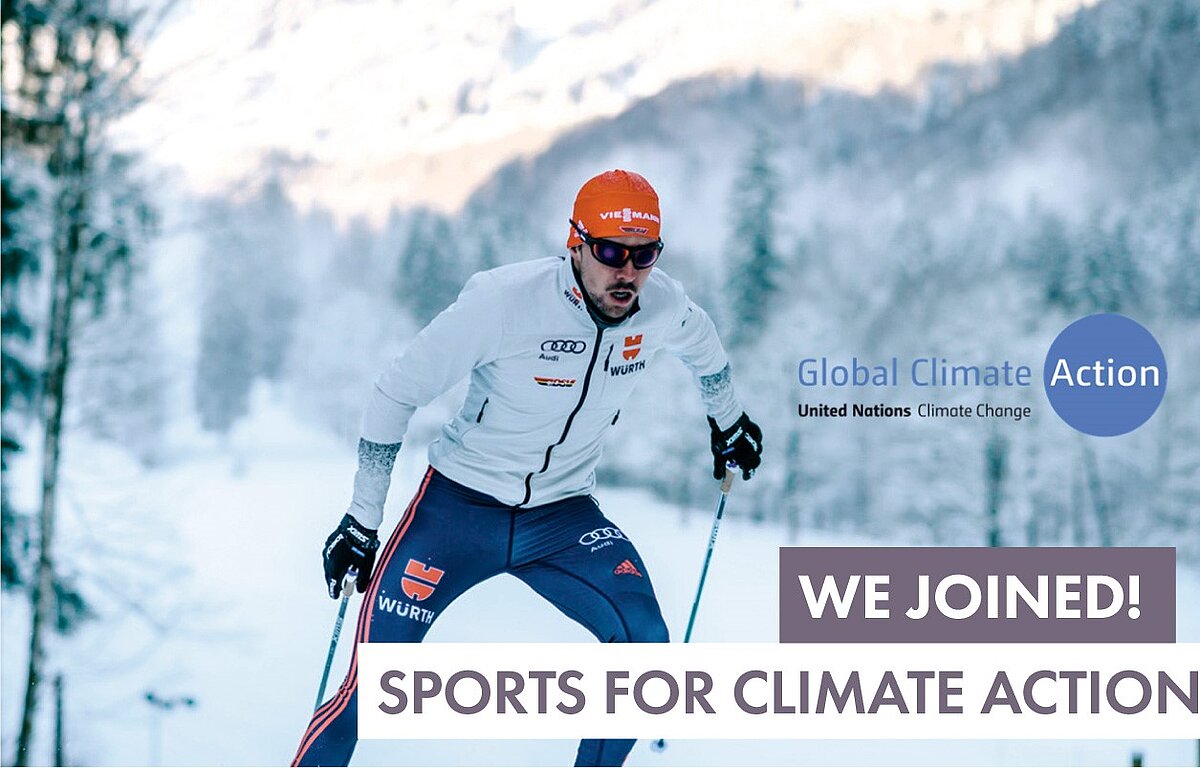
The reporting serves to determine the greenhouse gas emissions of the German Ski Association, Snowboard Germany, Freunde des Skisports, and the Foundation for Safety in Skiing (SIS). It is part of the 2040 Sustainability Strategy within the Climate & Energy action area and also serves as a binding basis for the United Nations Sports for Climate Action Framework.
Project Partners
Öko Institut e.V.
- Time period
- ongoing
- Project Sponsor
- DSV, SIS, SNBGER, DSV Active
- Focus
- Sustainability, Future & Environment
- Area of Action
- Climate & Energy
- Area of Responsibility
- Winter Sports Associations | House of Ski
- Topic
- Climate Change
- SDG
- SDG 13: Climate Action Measures
Description
HVO is an alternative fuel derived from biogenic resources that reduces greenhouse gas emissions by up to 80% compared to conventional fossil fuels. A multi-year supply partnership was established with Avia to provide HVO for use in slope grooming vehicles, snowcats, and temporary heating systems at DSV national training centers.
Project Partners
Avia
- Time period
- ongoing
- Project Sponsor
- SIS, DSV
- Focus
- Future & Environment, Sustainability
- Area of Action
- Climate & Energy
- Area of Responsibility
- Training Facilities / Federal Training Centers
- Topic
- Climate Change
- SDG
- SDG 13: Climate Action Measures

Description
The DSV nordic aktiv trails and centers designated by the SIS are sports areas that offer (year-round) opportunities to participate in Nordic sports. A concept has been developed for each sport and the local natural conditions, based on which trails are certified, mapped using geographic information systems, and signposted. Visitor flow is managed with ecological parameters in mind to protect wildlife habitats and vegetation.
Project Partners
Deutsche Sporthochschule Köln, Institut für Outdoor, Sport und Umweltforschung
- Time period
- ongoing
- Project Sponsor
- SIS
- Focus
- Future & Environment, Sustainability, Transfer
- Area of Action
- Safety & Health, Economy & Development, Climate & Energy, Mountains & Nature
- Area of Responsibility
- Training Facilities / Federal Training Centers, Winter Sports Destinations
- Topic
- Sports and Urban Development, SIS Seal of Quality
- SDG
- SDG 11: Sustainable Cities and Communities
Description
The “Sustainability & Environment” e-learning module is designed for full-time and volunteer coaches and instructors and covers topics related to sustainability, the environment, and infrastructure. This makes it easy for state ski associations to incorporate these topics into their basic and instructor-level training programs. At the DSV level, the module is integrated into the central theory course for Trainer-A in recreational sports. The focus is on teaching the basics, raising awareness, and providing concrete approaches for participants to take action in their own course and club settings.
- Time period
- ongoing
- Project Sponsor
- DSV, SIS
- Focus
- Future & Environment, Sustainability, Transfer
- Area of Action
- Mountains & Nature, Climate & Energy, Resources & Infrastructure
- Area of Responsibility
- Winter Sports Associations | House of Ski
- Topic
- Education
- SDG
- SDG 4: Quality Education
Description
The Sustainability Report for the 2023 BMW IBU World Biathlon Championships provides open and transparent information about the challenges and specific sustainability achievements of the World Championships. Of particular note are the economic benefits for the region, the sustainable sports facilities for future generations, and the numerous projects for children, youth, and clubs.
Project Partners
Oberhof Sport und Event GmbH
- Time period
- 2021–2025
- Project Sponsor
- SIS, DSV
- Focus
- Future & Environment, Sustainability, Transfer
- Area of Action
- Society & Social Issues, Safety & Health, Mountains & Nature, Resources & Infrastructure, Climate & Energy, Economy & Development
- Area of Responsibility
- World Cup events
- Topic
- World Cup events, Dialog
- SDG
- SDG 11: Sustainable Cities and Communities
Description
The 2021 FIS Nordic World Ski Championships in Oberstdorf were not only a major sporting event but also a pioneering example of sustainable event planning. Together with the market town of Oberstdorf and numerous partners, a comprehensive sustainability strategy was developed that takes environmental, social, and economic aspects into account in equal measure. The strategy outlines clear areas of action, each supported by appropriate indicators, and transparently assigns measures to them. Implementation was monitored to ensure compliance.
Project Partners
Marktgemeinde Oberstdorf
- Time period
- 2011–2020, 2021–2025
- Project Sponsor
- DSV, SIS
- Focus
- Sustainability, Future & Environment, Transfer
- Area of Action
- Climate & Energy, Resources & Infrastructure, Mountains & Nature, Safety & Health, Society & Social Issues, Economy & Development
- Area of Responsibility
- World Cup events
- Topic
- World Cup events, Dialog
- SDG
- SDG 11: Sustainable Cities and Communities
Description
Ruhpolding holds a special place in the winter sports scene. The 28 World Cup events and four IBU Biathlon World Championships that have already taken place in this small town are only possible because everyone is committed to a common goal: attractive, well-organized, and environmentally and economically sustainable competitions. The Green Legacy Report for the 2012 World Championships comprehensively documents the sustainability efforts.
- Time period
- 2001–2010, 2011–2020
- Project Sponsor
- SIS
- Focus
- Sustainability, Transfer, Future & Environment
- Area of Action
- Climate & Energy, Resources & Infrastructure, Mountains & Nature, Safety & Health, Society & Social Issues, Economy & Development
- Area of Responsibility
- World Cup events
- Topic
- World Cup events, Dialog
Description
In addition to the lessons learned from previous events, the “Guidelines for Environmentally Friendly Major Sporting Events—Green Champions” and the resulting sustainability plan served as an important foundation for the FIS Alpine World Ski Championships. After the event, the results were critically evaluated and published in this “Green Legacy Report.”
- Time period
- 2011–2020, 2001–2010
- Project Sponsor
- DSV, SIS
- Focus
- Sustainability, Future & Environment, Transfer
- Area of Action
- Economy & Development, Climate & Energy, Resources & Infrastructure, Mountains & Nature, Safety & Health, Society & Social Issues
- Area of Responsibility
- World Cup events
- Topic
- World Cup events, Dialog
Description
During the 2024–25 season, pellet heating systems were used to heat the temporary tents at the World Cup events in Ruhpolding, Oberhof, and Schonach. This allowed various tents (press, VIP, teams, fans) to be heated in a climate-friendly manner. The goal for the coming seasons is to expand this system further and optimize its use.
- Time period
- ongoing
- Project Sponsor
- DSV
- Focus
- Sustainability, Future & Environment
- Area of Action
- Climate & Energy
- Area of Responsibility
- World Cup events
- Topic
- Climate Change, World Cup events
- SDG
- SDG 7: Affordable and Clean Energy